Showing posts with label writing. Show all posts

Wednesday, October 5, 2011

Sunday, September 18, 2011

Craft nosiness, ape-men, scaffolding, and digging up corpses

DNFs

I DNFed a book last night, but I will still read it, though I quietly took it off my Goodreads shelf. This is a really popular historical romance, and I have loved others written by this author (and that's all I'll say, so don't ask, my friends!) But in my mind, this one of hers went all wrong - for me, anyway (and if it went wrong for me, it went wrong, since I can only read and write for my tastes). Anyway, it felt paint-by numbers, as though the life didn't spark. I've read books that have the same general set-up, some I've loved to death, but this one fell.

What makes one book work and one book not work, especially when they are similar?  What makes a book a living thing? I think there is a kind of magic in the best books, but there's more than that.

So I'm going to keep reading this DNF - I'll F it for the same reason people in the middle ages dug up graveyards and cut apart dead bodies--out of a keen desire to know what the heck went wrong!

It will also show me what went right with the books of this author that I have loved and embraced. I think sometimes good writers get under pressure to produce too fast, and my favorite writers take risks sometimes too - ones that don't work out - but that spirit of risking is what make them good, and I always look.

It's a kind of nosiness, I suppose. And hell, maybe I'll come to like the latter part of this book better, and I'll get the writerly learning experience along with some readerly pleasure. Maybe the book will spring up and run around and be okay. It will still show me something. Do other authors do that? Read for what went wrong? I guess I assume so. Maybe not!

Awesome Armstrong in a
minimalistic mood.
The less popular series: hidden dimensions
Another thing I enjoy, which is kind of along the same writerly nosiness lines, is that I look at the less popular series of authors I love, because sometimes those books show me how they pull things off in a more plain and straightforward way than than their popular series do.

For example, Kelley Armstrong's wonderful hitwoman series - the Nadia Stafford Series (an awesome series that I'm dying for her to continue beyond two books) - gave me a lot of insights into how she differentiates characters with language. It's almost like  you can see the scaffolding of her character magic; part of this, I think, is because the hitwoman books are quite simple and minimalistic, and about humans, too.

Same thing with Charlaine Harris' less popular series, the Grave Series (reputed to be the author's favorite of her series, and it's certainly my favorite of all her series).

The other Bon Temps
These books gave me a strong sense of the underdog and embattled character themes that are present on a more subtle level in her Sookie series. It is also interesting to get this dimension on small towns from Harris; it's as if the Grave series is the small town dark side of Bon Temps. The Grave series is far riskier, and the hero is a total beta. Is that why it didn't fly like Sookie?

Anyway, an author's body of work shows me things about individual work. What I mean is that the Grave Series shows me things about the Sookie Series that would not be revealed in the Sookie Series alone. This small town bit, for instance. Oh, wow, have people fallen asleep yet? Is anybody reading this sentence? Do you ever feel like that on blog posts? ahem, back on topic!

Hello ape man?
The first books: ape men
This week I finished Dreams of a Dark Warrior by one of my top favorite authors, Kresley Cole, and I then did something I've been meaning to do forever: I ordered Kresley Cole's McCarrick brothers series.

After that, I'll read her Pirate series. You can't imagine how excited I am to read them. I've noticed that in early books, authors can sometimes be viewed trying out themes and exploring techniques that they later perfect and smooth out.

I'm sure I'll enjoy both these series - it's unimaginable to me I wouldn't enjoy something Cole writes, but will reading her early stuff be like the missing link? The ape-man version of what is today her very highly-evolved writerly wonderfulness? Let's hope! I am nosy that way!

Stiltwalker image: Masquerade on the pumpkin festival (Festa della Zucca) in Verzone, province of Udine, region Fruili-Venezia Giulia, Italy by Johann Jaritz

Monday, September 5, 2011

What does this writerly screed have to do with my grandmother's notebook?

I’ve been carrying around this old notebook of my grandmother’s forever—it's sat in the bottom of a bookshelf in every place I live. It was entirely blank and unused, aside from one page of something random (and the front, where she wrote her name and ‘knitting book.’) Isn’t it cool? So cool, that I felt like I needed to wait and find a really important use for it.

 So, I didn’t write in it for years, waiting for the exact perfect use for it. Something monumental. And of course I simply never used it.

 There is this bad habit writers can get into, or at least, I can get into, which I think of as ‘scarcity thinking’ which is where I’ll think of an awesome event or realization or twist, and I think, I need to hold that for the pinnacle of the book.

 Whenever I find myself thinking that I need to keep something to spring later, I try to do the opposite — I make myself blow the cool idea early in the book.

 It’s because I have this writerly superstition that holding things back for the right time implies that there aren’t millions more cool ideas, and I think it’s a self-fulfilling prophecy—that is, waiting to use the good stuff makes the good stuff scarce. Holding back the candy makes it so that I have less candy, whereas if I spill all my candy right away, more will be there waiting for me later. That's the superstition I have, but I really think that's how it works.

 There is another form of it where I’ll hold off on getting my characters in worst-case-scenario trouble until later. I think that’s really bad for a story to let worst case scenarios hang out there forever. When I find myself doing that, I’ll try and spill that candy, pull that trigger, push the nuclear option button.

I'm not successful at it yet. It's a discipline I'm working on. Striving. You know how it is.

Have you ever watched the Sopranos? It’s this whole drama about Tony Soprano, the mafia boss. Not to criticize it, I mean, it was an excellent, bold, groundbreaking show, and I couldn’t have written it better. But, my husband and I would get so frustrated because they kept almost getting Tony in trouble, and then withdrawing the trouble. He never got arrested, convicted, toppled by another Mafia boss, nothing. They kept the Sword of Damocles suspended over his head—season after season after season, just wiggling around now and then. And I think that’s why the show got stale.

The opposite is Joss Whedon, who’s perfectly willing to go there, wherever there happens to be. Joss is a total hero to many writers, including me, and I think a lot of it, for me anyway, is his abundance thinking, which is the opposite of scarcity thinking. He’ll kill characters (sometimes twice) let people radically transform, even plunge the planet into apocalyptic chaos. He doesn’t hold back on going to the ultimate place. He’ll go there - it’s as if he knows that when he comes out the other end, there will be a new ultimate place to go.

Actually, Kresley Cole does that really beautifully, too, in a different way. She lets things get big and crazy and terrible and spills candy all over the place. Sometimes, I look at the events in just one of her chapters, and in other hands, I could see it filling a whole book. I think she is amazing.

So this is a big thing for me that I’m always working on, to get away from scarcity thinking, and always looking to my favorite writers for their example of it. Like, what would Joss or Kresley do?

I was thinking about it this past winter, and thinking about other places in my life where I do that.

I have favorite clothes that are so favorite that I coddle them and, I limit how much I’ll wear them, like they’re too precious. Why do I do that? I actually have another grandmother thing—these little Christmas candles from the 40’s that I never burn. Sometimes at Christmas I take them out but they get dusty if you leave them out too long. But I think I’m going to burn them this Christmas!

And this notebook of my grandmother’s, of course. So I thought, no more scarcity thinking with that notebook! I’m going to use it. I decided to use it for brainstorming notes on short stories and novellas. And it’s been really great, because the thing is in use, laying all over my office, in the living room, wherever. I look at it 1,000,000% more this year than my whole life combined. I’ll eventually fill its pages but why not? It's there to be used. So, that's my big thing.

So do you do that scarcity thing, too? Or do you have the opposite problem?


Images: Sword of Damocles by Richard Westall; Jelly Babies by Father Jack

Saturday, July 16, 2011

Confessions of a torrid eye cheater!

As a writer, I used to be a total snob about cheating on eye descriptions. Part of it comes from having worked for some years with a very exacting writing mentor. A brilliant and highly trained English fellow (and really, the best teacher ever) who would very nearly mock any liberties I took with eyes.

I used to be so pure about eye
descriptions. Now, not so much.

I can picture him now, my offending pages clutched in his hands: “His eyes were sad? What does it mean that his eyes were sad? His eyeballs, do you mean? Tell me, how do eyeballs look sad? They don’t get sad. Eyeballs are inanimate! Were there tears glistening upon them? Then you say that. Or is it the skin around the eyebrows that changed shape, creating a sad effect? Was his brow furrowed? Certain kind of frown?”

This whole thing made me really sensitive to writers cheating with eyes. Even some of my favorite writers, those I consider towering in their brilliance, cheat a bit. Even major huge NYT best-selling writers cheat quite boldly. This isn’t a real line, but stuff like this: “There was a stormy look in his eyes, chased by sorrow, and then a dawning recognition of what had come to pass in that room, after which his eyes were shuttered with hate.”


I would sometimes be darkly impressed by a line like that, a total sleight of hand that’s a blatant form of telling disguised as showing. A writer pretending to describe outward appearance, but telling a state of mind. And nobody made her rewrite it! And here I would be slaving over tears and hardened facial planes squinching eyes.

I really kept to my purity around eye description for a long time. I don’t believe you will find any eyeball liberties whatsoever in Mind Games, where I tended to rely a lot on widened and narrowed eyes, as well as gleaming eyes, and sometimes sides of eyes with little wrinkles of happiness. 

I recall doing one or two eye cheats in Double Cross and being thrilled nobody stopped me, because it really is convenient to cheat like that when you have a lot going in a scene. I didn’t cheat horribly, stuff like “a surprised light in her eyes.”

I have drunk the eye-cheat  Kool-aid. It's quite delicious! 
Light was kind of my gateway cheat. In real life, people can have a light in their eyes, but adding surprised is the cheat part—I mean, if you showed a lineup of eye photos, you wouldn’t be able to tell a surprised light from an angry light without the context of the face or situation. There simply is no such thing as a surprised light.


Anyway, I’m doing edits on book #3, and I was just laughing the other day, because I have totally started eye-cheating! Here, a selection of my cheats:
I keep a frantic eye on the air overhead.
Packard turns to me, and there’s a lonely light in his eyes.
Otto sits up, brown eyes glittering darkly.
Packard's lonely light is the boldest one--basically, I'm telling the inward state of the man by pretending to show it in the eyes. Okay, glittering darkly is pretty bad—that’s really about something going on in Ottos's face that I didn’t feel like getting into. Even that frantic eye on the air overhead is pretty slippery. My narrator is frantic, but the eye isn't. All in all, total cheater ways of sneaking state of mind into a physical description. But oh so convenient.

My name is Carolyn Crane and I am an eye cheater! 

Don’t get me wrong, I’m not condemning writers who eye cheat. (Especially since I have started!)  I mean, you can walk into any museum and see a good portion of beloved paintings that aren’t realistic whatsoever, and nobody’s going around like, that’s not a even what a hand looks like!

There are books on my loftiest keeper shelf (penned by writers whose feet I would kiss in a second if that sort of thing wouldn’t make me persona non grata at conventions) that contain the phrase “eyes were shuttered…”  Different writers are up to different things, and have different goals, and if an eye cheat works, it works. 


I just think it’s funny, because, if you knew how pure I used to be around it, you would totally laugh about the lonely light in Packard’s eyes, too. But, what the heck! I am keeping that lonely light line, and I might write more just like it.    

Public domain images from wiki commons: Anton van Dyck self portrait, The Eye by Haley Davis, Charles V at Muhlberg, eye detail, by Titian, Gjord i Paint.net Jagsjalv 

Saturday, June 25, 2011

Great moments in last night's reading: immersion vs travelogue in UF world-building

Gah! I've been so swamped, I haven't done one of my great moments posts forever, and I have tons of great moments I've made notes for to talk about. Okay, this one is from last month. 


Great Moments from Last Night's Reading
Book: The Sweet Scent of Blood by Suzanne McLeod
Page: 61
Spoiler level: zero

There’s a certain sly element of cool in Suzanne McLeod’s The Sweet Scent of Blood. I was thinking today about how she achieved it, and in part, I feel like she does something that a lot of my favorite ultra-contemporary, high-realism cable dramas do, like THE WIRE, or the movie INCEPTION, for example, in the sense that you’re admitted into a world, but not given a whole travelogue about it.


This creates a sheen of otherness, and so part of the fun and dazzle is to behold all the people and strange goings-on and piece things together. By the end, you get the ins and outs and back alleys, and it’s kind of satisfying. 

I don’t mean that the plot is hard to follow, though it’s certainly more complex than most, but more that you get the world through immersion.

This is especially true with the small details—the surface details. I was absolutely thrilled with this underground ride our main character Genny took. These goblins come onto her car. Gazza is a jerk. We’ve seen goblins before in the book - as literal minded bodyguards - but suddenly there are these other kinds of goblins. Here, the passage:
...His white translucent ears flicked like a rat’s and he clutched a gold lamé satchel tight to his chest, almost obscuring the London Underground badge on his navy boiler-suit – a gold embroidered ‘G’ that marked him as a Gatherer.
He slid a thin grey finger down his twitching nose. ‘Rubbish, miss.’ 
My disguise wasn’t good enough to trick a goblin, or even a vamp – not that it mattered. It was only the witches I was trying to fool. 
I shook my head at the goblin, then touched my own nose in reply. 
He patted the flap of his satchel. ‘Thankee, miss.’ 
The goblin clomped along to Gazza, his trainers flashed green with every step. ‘Rubbish, mister.’ 
Gazza sneered again. ‘Bugger off, you little creep.’ 
The goblin grinned up at him, baring black serrated teeth, three of them studded with square-cut garnets. He opened his mouth wide, leaned forward and snapped his teeth together with a loud crack, right next to Gazza’s cheap PVC-covered groin. ‘Rubbish, mister,’ he demanded.
Huddling against the door, his eyes wide, Gazza fumbled in his coat pocket, found something and offered it warily to the goblin. A stick of chewing gum, still wrapped.
Thin fingers plucked at it, then tucked it away inside the gold lamé satchel. ‘Thankee, mister.’ The goblin stamped his feet, leapt onto a seat and curled up in a ball, his arms hugging tight around his bag.
And that, to my memory, is the first and last we see or hear of these freak-ay goblin trash gatherers. Why are they asking people for trash? Why do they have gold lame satchels? What is the deal with the goblin stamping his feet, leaping onto a seat, and curling into a ball hugging his bag?

You never find out, and I absolutely loved that, because it made this strange world truly strange. If this was key to the plot, I might feel mystified or even left behind, but it’s not key to the plot. So it just became this quirky, random world detail that really made me as a reader feel like I’d gained entrée to a new land.

McLeod definitely takes a risk with this, because it’s such extreme ‘show-don’t-tell’, albeit for an insignificant surface detail.

I think a lot of other authors, including myself, might have given Genny some opinions about these guys as a way to guide the reader, like, “I don’t know what these goblins did with their trash or why the underground union employed them, but at least the cars were clean. Some speculated that… bla bla.” But wouldn’t that be boring? It is way cooler just to have them show up, collect trash that’s not even trash, and exit.

Because, isn’t how that is when you’re traveling in a foreign country? I enjoyed this effect. 

Image: The Fra Mauro map. Part of China. 1459, from Wiki Commons.

Saturday, June 18, 2011

Shoes, character breakthrough, and revised thinking on high punctuation within dialogue


Character breakthrough.
I was doing some plotting and reworking on a part of my new paranormal series and had this breakthrough. Do you know the fable of the grasshopper and the ant?  I realized my hero in this book is the ant type, jealous of the grasshopper, and my heroine is the grasshopper type trying unsuccessfully to be the ant. Oh, this helps me immensely, you can't even know.

Stop the presses! I have revised my opinion on high punctuation in dialogue.
Re-reading Meredith Duran's Bound by Your Touch, a favorite book of mine. I usually hate high punctuation within dialogue (semicolon or colon) but I've changed my tune: now I hate it in all dialogue except a certain kind of playful facetiousness, like in this scene, such a fun one, where our hero, Sanburne is wasted at his own party and his sister, sitting down next to him on the stairs, tries to get his attention:
... Elizabeth's fingers fastened onto his upper arm, digging for attention. "Do you hear me? Are you awake?"
He was curious about that, too. "Are my eyes open?"
She made a noise of exasperation, then took his chin in her grip, yanking it up so their eyes met. "They are open," she said. "Behold: it is I." 
There could be no other punctuation there but a colon. The colon is perfect! Really, I just love this behold bit of hers. These two probably grew up reading books and seeing plays that contained that sort of language, maybe still do, and here it is as part of their humorous language, the way I sometimes sing to DH: Don't do the crime if you can't do the time from the TV show Baretta. (Yup, I'm in my 40s!) Anyway, I love when characters place themselves specifically in relation to their time, instead of simply being of their time.

Sometimes when I type these things out, I discover new wonderful treasures in the writing. Like those fingers, digging for attention. And the feel of this easy sibling relationship. You get so much out of this little exchange.

Shoes
I go wildly back and forth on these shoes I got from a secondhand store. They are leather, made in Mexico, and brown, a favorite shoe color of mine. Sometimes I love them, and other times, I'm not so sure.

I am a fan of buckles on things, that is part of the attraction. And they work with bare feet. Today I love them.

Hey, happy Saturday everybody!
I have a big day job project to work on this weekend, but plan to get some novel writing in, and some exercise, and some quality time with the husband. Hmm, we'll see how that all works out. What are you all up to?

Wednesday, April 20, 2011

Over at the Mind Meld talking non non-genre influences

I was so flattered to be asked to participate in one of SF Signal's Mind Meld features, which is where they ask a lot of different authors the same question. Today's question was:

 What non-genre books influenced you in some way? How?

I picked out three books, and tried to think of specific and general examples of how they influenced me. Actually, I had a lot of fun reading the other writers' responses, too. It was just really cool to look at what books they treasure and learn from.

What did I pick? All is revealed here...

Wednesday, April 13, 2011

Layla prefers first drafting & I prefer editing...can two oppositely-inclined writers help each other?


A bit of background:
So, one night on twitter, my pal Layla Messner (@LaylaMessner on twitter) and I had an interesting exchange on revising/editing and drafting. It turns out that Layla enjoys first drafts far more than editing. And for me, first drafting can be like cutting open a vein, and revising and editing is an enchanting and fun cakewalk. We were curious about each other’s approach and we wanted to delve into the subject beyond what you can do on twitter. Isn’t that what blogs are for? 

******
 
Carolyn: Hey Layla! I’m so glad we’re doing this. Partly for selfish reasons: I want to be more into first drafting. Like you! So, questions: What do you enjoy about first drafting?

Layla: As I was reading your intro the phrase, “first drafting can be like cutting open a vein” jumped out at me. You might be thinking that since I love first drafting, I must be about to say that first drafting is nothing like that for me. But guess what? It totally is. Not all the time, but often. And I love that feeling.

I was not going to start with that aspect of first drafting, but since you brought it up, why not go right for the challenge. Yes, first drafting can be a warm and fuzzy flow of creativity for me, but that’s easy to love. What’s harder to love is that bleeding-onto-the-page-feeling. So, I’m going to try to describe what I love about that…

It’s a very raw feeling. Like telling uncomfortable secrets. But I think what I love about it is that there’s nobody here but me, no one to see it. I don’t have to worry about what anyone else will think. I can tell the absolute truth, to myself, no matter how dark it may be. I can put it to words, and see it in front of me. Nothing hidden.

Carolyn: Wow, so you’re thinking uncensored truth. This is already giving me insights. Here’s what I think is interesting: we even have different definitions of the phrase “cutting open a vein” when applied to drafting. When I wrote it, I meant it more like an unpleasant thing, and also a kind of drudgery, but worse, whereas you saw it as getting some truth down, messy as it might be.

On a first draft, my thinking is always, get this thing down, and then the fun can start. I think it’s natural for first drafts to be pretty bad, and I like muscling them into shape, but not building them from the ground up. The more refined things get, the more fun I have. Help! What do you say to a person like me? 

Layla: You say, “My thinking is always, get this thing down, and then the fun can start.” I’m picturing the first draft as a huge hill in front of you, and if you can just climb it, it’s a nice downhill from there?

Carolyn: That hill metaphor is perfect, though I don’t worry about not getting a thing done, it’s more about impatience, and I don’t like wasting a bunch of time, or going down wrong paths, and most of all, I can’t see over the top. I can’t SEE the thing to work on it until I have a draft down.  Clearly I’m not valuing or enjoying the journey of the first draft! 

It sounds like for you, first drafting is a high trust/high faith experience, and revising is an experience characterized by less trust and faith, or, maybe more worry. Whereas for me, drafting is a low trust/low faith experience, but once I have that draft, I feel confident I can make it work.

Layla: That sounds right on.

Carolyn: What’s interesting is that, the only times I DO enjoy first drafting is when I’m discovering things as I write, getting to some unexpected truth. But, mostly I think I get to the truth in a piece through rewriting and refining—the more I work on it, the more it comes into view and the more I see where it needs to go, and the more fun and exciting it is.

I approach a first draft a little like an engineer, arranging scenes I’ve imagined and getting their rudiments in, so that the fun and real work can begin. But, maybe you have a point. Maybe I’m not comfortable with something that’s too “in process.” I have a sense of the first draft as something to be gotten under control.

Layla: Right away reading this, I notice that it is the editing process that I approach like an engineer—arranging the scenes—and it is exactly the part of editing that doesn’t sing for me. The editing that I do enjoy is polishing the text itself, which I find to be more creative. I think that with first drafting especially, but also with text editing, I drop into right brain/alpha brainwaves much more easily than during structural editing. I wonder if it’s the methodical “left-brained” approach that we both find drains some of the joy from the process?

Carolyn:  Yes! Well, I think we have made a mini-discovery - we both dislike the part that for us, is the least creative; you feel like an engineer in the revision mode, I feel like an engineer during drafting. That little tidbit is really kind of golden, I think. I need to think about that. So, you see most of the real creative work as being in the first draft.

Layla:  Yes. The biggest impediment to my creativity is my inner censor, which tries to convince me that editors/critics/parents (I write YA) will take objection to my subject matter. I keep this voice quiet in the first draft by reminding myself that no one else has to see it. Because my first draft is produced in this atmosphere of trust, I imagine it is pretty close to the truth of the story. But once I switching to editing mode, the censor comes back full force and the process starts to feel less like fun creativity and more like an exam. To make matters worse, the closer I get to the finished version the more terrified I become that censor will win and I will ruin the book, destroy its soul in an attempt to be marketable, conventional (i.e. conform to conventions), and tight. Help!

Carolyn: Oh, so you have a bit of an editor/judge on your shoulder during revision? That can be hampering. If I think of people at all, I’m thinking mostly of my critique partners, and sometimes of supportive readers. I never envision harsh editors or frowning readers.

My mindset is like, there is a hidden perfect story in there and I am hard at work finding it, and the drudge work is done, and I’m getting closer and closer. And I have this feeling that they will be excited for what is working and they will tell me what isn’t, and that will help me get closer to my goal.

But I know that “onstage” feeling. Is there a way you can shift your mindset about your audience in the editing process? Maybe think more about your creative allies?


Layla: I love the idea of imagining a world of allies, rather than critics. I’m going to have to cultivate that. After all, at this stage the audience is all in my imagination—why not imagine a supportive one, right?

Can you take me through a “day of editing with Carolyn”? What’s your process like? And how does that compare with first drafting?

Carolyn: I do my editing on the computer, and my work time is in the morning, if I can arrange it, so generally, I just have my black tea and breakfast, and I sit down and read my email, and do some social media things while my mind is waking up, and then I open my document.

Usually I’ve highlighted an area in red where I’ve left off, so I undo that red and just start reading. And things just pop out at me. And if something doesn’t feel right, I change it and rearrange things until it’s right. I have a vision I’m pushing the story toward, but I sometimes discover opportunities. Though sometimes there are specific things, like, make sure a character is wearing a hat in this scene, or, I need a certain thing said. A lot of times, I’ll back up and take another pass over what I just revised and re-polish. I can get lost in the editing and do it for hours. Unlike first drafting.

My editing feeling is that of relaxation and puzzle-y, polish-y fun, as opposed to first drafting, which can be a bit more white knuckled.

 What is your mindset as you sit down to write? What is your process?

Layla: You want to know about first drafting, right? I try to write every weekday, and I usually set aside time. But even so, a lot of the time when I end up working on my first draft, it’s in addition to that time. In other words, I’ve just gotten an idea. I sit down to grab it while it’s there and the next thing I know I’ve written a whole scene.


A little while ago, I was reading the Deadline Dames blog (http://www.deadlinedames.com/) and one of the dames – I apologize for not remembering which one – was talking about the fact that she can’t tell the difference between the stuff she wrote in a moment of inspiration and the stuff she made herself sit down and plod through. I wish I could say that is the case for me, but the scenes I write in moments of inspiration seem to be the major building blocks, and the language is almost always more alive and often requires less editing than scenes written when I forced myself to work. But I still sit down and work even when I’m not inspired because it works to move the project along. I feel happier when I write, and inspiration can and often does come halfway through a writing session.

So, assuming it’s a “scheduled” writing time and not a blinding flash of inspiration, I sit down, pick up where I left off on my last writing day, or wherever I feel like working. And I just start writing whatever comes to mind.

If I don’t have an idea, I will start reading/tweaking a few paragraphs back and that will get the juices flowing. I read a quote by an author (again, I can’t remember who) who said always stop for the day when you know what comes next. I try to do that. At the end of my writing day, I’ll make a note in brackets [like this] of what’s coming next, so I have somewhere to start.

One writing practice I enjoy freewriting. (Setting a timer and writing from a prompt for 5-10 minutes. The goal is to never stop writing during that time, not even pause.) I often first draft in a similar style—just write and don’t stop.

I keep track of my daily and weekly words, and running word count on my blog, which is something I find very motivating.

I just love the experience of finding out what’s going to happen next.

When I don’t feel inspired, I’ll often edit instead. And, interestingly enough, when I edit /while/ first drafting, I really enjoy the honing process. Hmm.

Carolyn: Do you have any tips for first drafting?

Layla: The more writing advice I read, the less I want to be caught giving any, but keeping in mind that writing is different for everybody…

I often hear people saying that if you’re stuck, remind yourself that it’s just a first draft and no one else has to see it. And to just sit down and write. These work for me. Otherwise…

I think practicing freewriting could help, and thinking like that when you draft – just write whatever comes, quickly. So what is you don’t use it.

Allow yourself to be surprised.

Trust your spontaneous use of language.

Set some kind of doable goal you can reward yourself for.

Try to enjoy it, like a road trip with no set itinerary.

If all else fails, maybe tell yourself, “No, this is not my favorite part. But I have to do it to get to my favorite part, so, by golly, I am going to try to enjoy it. I’d like to write a bunch of words today so that I can have the pleasure of editing them later.” Or, “It’s okay if these words aren’t any good. I get to edit them later. I love editing, so extra bonus for me.” *grin*

Your turn.

Carolyn: My tips for editing success would be…hmm. I’d say, take yourself out of it. It’s between you and the sentences and scenes, and just flow along until you hit a snag, and then fix the snag and keep going. I mean, if you’re imagining anyone, it’s best for it to be supportive people, but ideally, you’re in the reader’s seat during editing, and I mean, you as a reader, making something you’d want to read. 

I would say, trust yourself, too. I don’t know how you cultivate that, but the person you trust to get that great first draft down is just as capable of discovering more truth and more cool stuff on the editing end.

Henry Miller once said, “don't be nervous. Work calmly, joyously, recklessly on whatever is in hand.” I try to keep that in mind on first drafting, but it’s great editing advice. You’re not going to ruin the draft by editing. If you’re worried about it, save a version and then edit a different version, and be bold with it, and then you’ll always have that old draft if you decide you wrecked it, but you probably didn’t.

Another weird thing: you mentioned that you enjoy the honing process when you’re revising during drafting, as opposed to when you revise during revising. I’m the same way, but reversed. Often, I have to write entirely all-new scenes to stick in to a complete draft, so, that’s a type of first drafting, but I never find it as unpleasant as when I’m doing a scene on a first draft run.

So, it’s all in the mindset! I have to think about this.

Layla: Yes, it’s sounding more and more to me like an issue of things “things that interfere with the creative mindset,” or something like that—i.e. being in a rush, imagining outside critics, being “left-brained”…

Carolyn: This is so helpful. Okay, take-aways. I like to do those for myself. A few things I’m taking away here: the idea that a first draft like telling uncomfortable secrets. I love that. It appealed to me greatly when you said it. Also, the idea that it’s not the task that’s the problem, it’s my mindset about it - methodical, uncreative drudgework. Stop looking at it like it’s engineering. Enjoy it. Allow myself to be surprised, as you say. I really like that.

Layla: This discussion has been a pleasure, and so enlightening. My take-aways would definitely be, making a conscious choice about the audience I imagine (a supportive one), and “trust yourself…the person you trust to get that great first draft down is just as capable of discovering more truth and more cool stuff on the editing end.” Thanks, Carolyn! I’m going to take these to my desk with me.

On my way out, I’d like to open the discussion…What about you? Love drafting? Editing? Have some tips to share? Please chime in.

Carolyn: Thanks so much for doing this with me, Layla! Yes, readers, let’s hear from you! 

Nb: Layla can be found on twitter (@LaylaMessner) or on her website here!

Saturday, April 2, 2011

Yes, I seem to be in 8th grade at a roller skating rink

I realized something today while I was out for my run. Beyond the usual OMG I need to get in better shape. And that is, I'm mentally stuck in 8th grade...at a roller rink...on the sidelines during couples skate.

How I realized is that, when I run, I listen to the radio. I just like to switch around stations and be surprised. There's currently this one oldies love song station on one of my presets.

It's sort of a new station here in Minneapolis, and I like it because they play Elton John and stuff like that. But I started noticing that a lot of times when I'd land on it, my mind kept being sucked back to this roller skating scenario. Me with my three 8th grade galpals, Robin, Sue, and Cheryl, at this roller rink we'd go to every weekend, our hair all pretty, hoping to meet boys, of course.

And we'd be skating in circles all night to the Eagles or Journey or whatever, but a few times a night they'd clear the rink and puts the lights low, and fire up the disco ball and play "Xanadu" by Olivia Newton John or "I Still Go Crazy" by Barry Manilow or something like that, and it would be couples skate, and a boy had to ask you to skate. And of course, no boys EVER asked me. I was a chubby, slobby brown haired girl. (FYI they always asked Cheryl.)

So, back to me out running. At first I blamed this all on this radio station, thinking, Wow, what's up with this station? They are playing all these old rollerskating couples-skate songs. WhatEV!! But then I realized, okay, maybe I haven't heard these songs for years, but it wasn't like I only ever heard them at the roller rink. But they only remind me of the roller rink. And I got the idea that I'm a bit fixated there. At that roller rink.


I do think people get fixated on places in time, on incidents that they go back to really easily. Sometimes these incidents are big and dramatic, like a violent death or a horrible fire, but I think most of the time, the place a person can't stop being drawn back to is more emblematic than dramatic. Emblematic and mundane.

Like being a wallflower at a roller rink. I'm stuck other places of course, but when I think about it hard, all the places I'm fixated relate to being unseen in some way, and not always on a romantic level, but that's all I'll say about that, because this isn't that kind of post.

It's a writerly post! As a writer, I find it easy to pin characters to a highly dramatic and formative experience, and less easy to get a sense of the quieter kind of experience that also shapes them, that emblematic yet mundane place that a character returns to. I can tell you what that place is for Justine Jones, but I need to think about it for Packard, and for the others. It would be a good thing for me to figure out.

Some of this thinking spins off from something I learned from that show, In Treatment. Do you know it? It's about this psychotherapist named Paul (played by Gabriel Byrne) and it takes place almost entirely in his sessions with people. Paul is like the Sherlock Holmes of people. He’ll talk to a person for 20 minutes, and at the end of the session, he knows all this secret stuff about them, and when he reveals it, it’s like this magic trick.

One of the coolest things I've learned from In Treatment is that the random anecdotes people tell over and over about their life aren't random at all. They are frequently like secret codes to important things about them. At first, I thought it was just a convention of the show, but then, I started listening to the recurring stories of people who I know well and I realized that they are startlingly revealing. It kind of blew my mind.

The roller rink thing is different than one of those anecdotes. Obviously I'm telling it here, but it's not a story, it's more an internal thing, but I think it's the sort of thing that can be a character signpost, much in the way a supposedly random anecdote or fiery formative experience can be. Hmm. A Saturday thought. 

Saturday, March 5, 2011

A funny thing about fuck

Editor and agent comments caused me to spend a bit of time thinking about the word 'fuck' this week, especially the strange way it operates when used in character dialogue. Fuck is not a word like other words - it's tricky and mysterious, and sometimes it's one thing, and sometimes it's another.

What the F am I talking about? What exciting conclusions did I draw? Come read my very writerly post over at The League of Reluctant Adults to find out!!!

Image: F images by ACF from wikimedia

Saturday, February 19, 2011

Random thoughts on how Megan Hart and Jill Sorenson create their awesomely realistic characters


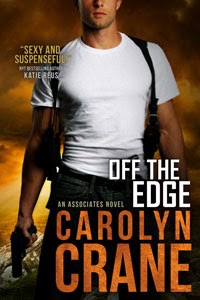
In addition to being a great read with
 fabulously realistic characters,
this book contains my favorite-
ever angry sex scene!

Lately I have been thinking a lot about realistic characters in fiction, and about how much I enjoy that feeling when a writer’s depiction of character is so precise that it surprises and delights. And this got me thinking about a couple of my favorite writers, Jill Sorenson and Megan Hart.

I know they are working in different areas; Jill Sorenson writes Romantic Suspense and Megan Hart is all across the board, though most famous for her erotic novels. However, with both, in addition to penning compelling, thrilling books that I love (and both are excellent at writing sex scenes) I always have the sense that they are writing about genuine and very regular people as opposed to made up people, or people based on people in books, which is a trap even the most excellent authors can easily fall into. 

With both Sorenson and Hart, you feel like their characters could be out there living real lives, grumbling about their cable bills. I’ll see a woman or man on the street now and then and feel like there could be a Hart or Sorenson novel about this person.

The characters in this book felt really
unique, yet I could easily imagine
them in the real world. Both Hart and
Sorenson are masters of this. 
What makes a Hart or Sorenson character so achingly and wonderfully real? I have actually sat around thinking about this. 

One of the things I think is that I can look out at American society (both of these authors tend to set books in the US, which is, of course, where I live) and know where they fit in.  I know what cultural, educational, socio-economic, family, and class backgrounds these characters are coming from. I know roughly who they would have been in high school, and I know if I would have been friends with them or who they would have hung out with. I know whether they would shop at Target or Wal-mart or Anthropologie or what. Not that these authors supply every little bit of this information in a book, which would be a bore, but they supply enough that I can fill in the rest, the way I might with a real person.

I doubt Sorenson or Hart set out thinking about all this - I think they're both talented and good at observation, but of course I have to analyze it, and it does seem like the familiarity part comes from cultural, educational, socio-economic, family, and class touchstones. 

Delivers on sultry sexiness,
& the most awesome teen characters.
In addition to being situated in larger society with touchstones, their characters aren’t types. This may seem like a contradiction, but it’s not. Scratch the surface of anybody who appears to be “a type” and you always find a wholly unique individual, and both Hart and Sorenson really seem to get this in a cool writerly way. 

In other words, these writers create characters who are unique, yet familiar. It's really quite a neat feat. 

Another thing: both authors, who are white, have written non-white characters and (to me) seem to have taken the time and care to have thoughtfully integrated what that means into those characters’ worlds.  Megan Hart’s NAKED features Olivia, who has a white mother and a black father, and Jill Sorenson’s hero of SET THE DARK ON FIRE is half Native American. I think it can be tempting to put in diversity for diversity’s sake without taking the time to make those elements echo through a character’s core. Sorenson and Hart take that time.

One of the characterization tricks I abuse is to have a trusted secondary character deliver insights into a main character; it’s one of my favorite ways to guide a reader’s thoughts. However, I’ve seen both Hart and Sorenson do this great thing that goes a subtle step further where they have their main character uncomfortably aware of conclusions (true or false) other characters are drawing about them.

Sometimes this is my fave Hart book,
but sometimes it's Dirty or Broken.
I’m thinking of the opening of SET THE DARK ON FIRE by Sorenson where our heroine, Shay, has this rare partying night out for her birthday, and is unexpectedly called onto a special work assignment the next day, hung over and a bit disheveled. She’s painfully aware of the conclusions the new cop in town is drawing about her—in this case, he’s drawing wrong conclusions, but it was so great for her characterization.
Luke wasn’t an easy man to read, but the look on his face just now had been clear enough. It was the same expression she wore when she saw leftover chocolate cake in the refrigerator.
Disgusted with herself for wanting it.
Or, there is this great scene in SWITCH by Hart where the heroine Paige has moved into a fancy apartment complex (the most inexpensive unit in it, though) and it’s a big step up from where she grew up. There is this scene where she is highly aware of another woman in the lobby assessing the cost and brand of her clothes. That keen awareness was so powerful for me getting something essential about that character.

Another thing I’ve noticed is that both of these authors give their characters—especially their heroines—really robust and detailed family lives. Current family, past family. And the important thing is, those families feel real, and have flaws, quirks, and strengths, and could really exist in the world. Often, both the brokenness and the gifts of their families of origin contribute mightily to forming these realistic characters...just like real life people! 

Looking feverishly forward to
this one (late March)
On the subject of family, I don’t know if it’s because I don’t have kids, or because I haven’t been reading writers who do kids well, but I rarely find characters' kids and younger siblings fascinating in books, but wow, Sorenson’s teen secondary characters are so awesome! Not only with strong, good plotlines on their own, but they add to the world, to the central drama. She weaves them in so well.

I’m looking at what I’ve written here, and I think part of the reason I’m focusing on it so much is that, okay, I know that, while my characters are unique in their way, they tend to dwell inside the vacuum of the book, and not have the touchstones that make them both unique and familiar. I’m not being self critical, really, I mean, urban fantasy characters (and to some extent, paranormal romance characters) dwell in the hierarchy of a supernatural society as well as a human society, so, placing them in a precise way within a larger human society is not traditionally a priority, though there are exceptions. Vicki Pettersson’s Joanna Archer and even Sookie Stackhouse come to mind.

But I love how it feels to read about a real-seeming character, and so I guess I’m thinking about that this morning, and trying to learn something from it for future books.

More info: visit Jill Sorenson's site or Megan Hart's site

Friday, November 26, 2010

Miller. Rabbit holes. Writing. Recklessness.

I am working on a guest post for Lori over at Escape Between the Pages tonight. It's about taking walks on holidays, and I remembered that a writer I greatly admire had some quote on walking and thinking, how walking gets the mind rolling. I was pretty sure it was Henry Miller. I googled and promptly went down a Henry Miller rabbit hole. 

Wow, it's been a while since I thought about Henry Miller, who was major favorite of mine in my early twenties. Not for the famous Tropics so much as his personal writings. Sexus, Nexus and Plexus, Black Spring, Collossus of Maroussi. 

Then I went to my bookshelf and pulled down a copy of The Wisdom of the Heart, a book of his essays, and flipped through, wondering how I might feel about Miller now that I'm in my 40's. Gah, sorry Lori! I'll get that post done yet tonight!

Anyway, on my google odyssey, I stumbled on a great Henry Miller blog, which featured Miller's list of writing commandments, which Miller made for himself in 1933; You have to scroll down to get the full list, which is three posts from the end. But of particular interest to me these days are: 
#3. Don't be nervous. Work calmly, joyously, recklessly on whatever is in hand.
#8. Don't be a draught-horse! Work with pleasure only.
This is because I am working on two short stories for anthologies. I've been getting into this way of thinking, like, OMG, these stories have to be amazing because they might be the only thing somebody sees of my work. People will read these stories and decide whether they like Carolyn Crane based on them. Shit! Gotta make this count! 

And of course that is a terrible place for a writer to be. So, I'm looking at this list, and I especially need to emblazon #3 across my wall!!